Simon Britton

movement

My artwork on this website includes the following sections:

  1. Drawing
  2. Sculpture
  3. Performance
  4. Painting

All these categories are interrelated in their concern for structure, space, movement, light and colour. Though the human figure and groups feature a lot in my work, there are as well more abstract configurations, such as the reliefs and constructions, where the dynamic placement of elements, balance and movement is implied in the same way as the components of a figure or figure group.

I have spent much of my life teaching. Education and my own work have always run parallel, nourishing one another.

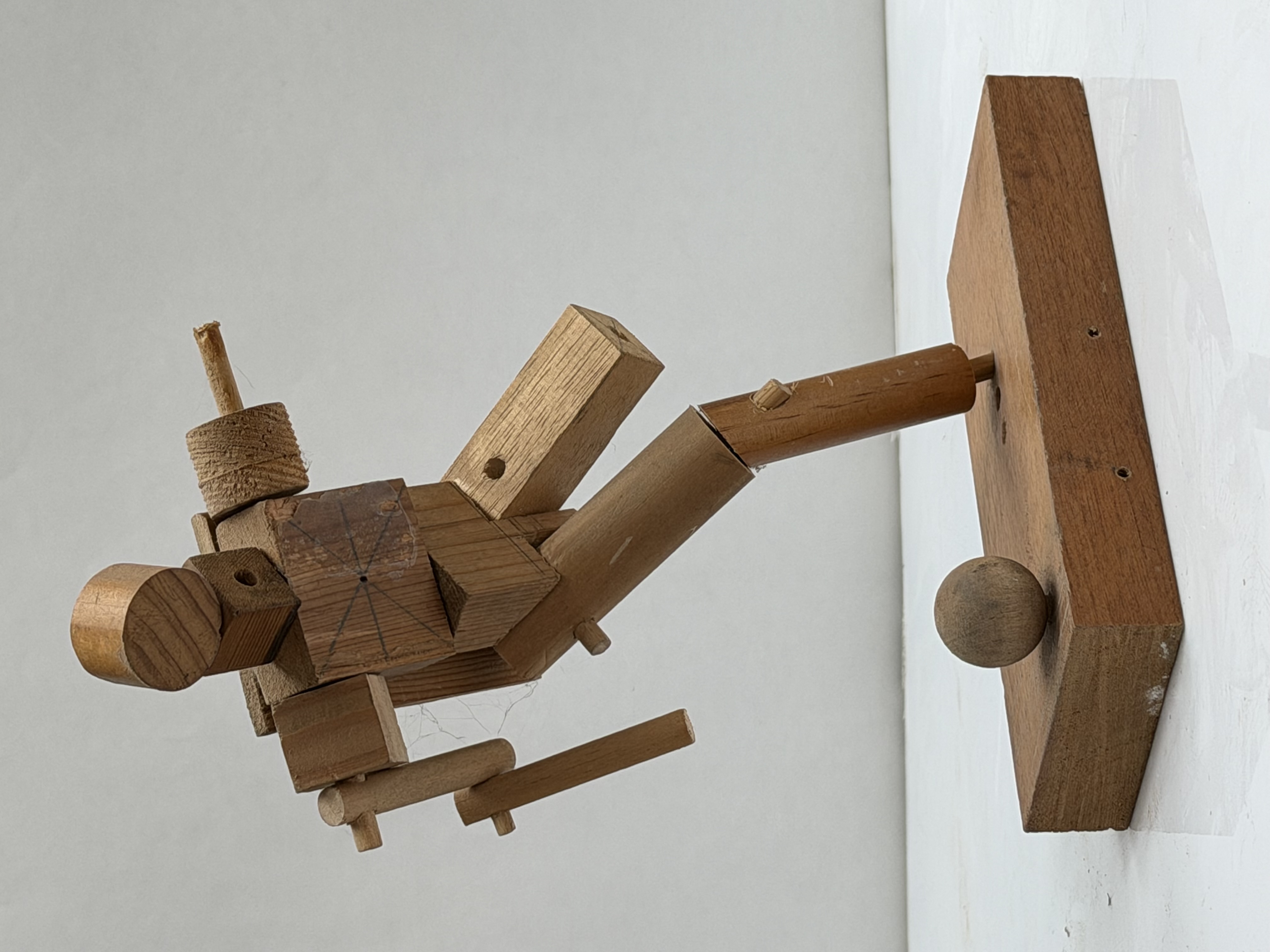
Footballer — a constructed wooden figure caught at the top of a kick
Fig. 01Footballer, constructed wood, 2024

The work · 01

Drawing

Vivid colour life-studies, ink figure groups and movement studies — the root of all the other work.

The work · 02

Sculpture

Reliefs, clay figures and portrait heads modelled from life, and the jointed wooden figures and constructions caught in mid-movement.

Reliefs

Wooden reliefs

Modelled from life

Clay figures & portrait heads

In wood & mixed media

Figures, constructions & totems

The work · 03

Performance

In the 1970s Simon’s lifelong subject — human movement and relationships — stepped off the page and into live performance. Working with the theatre group Forkbeard Fantasy, he made work in which figures could move only by moving together. It toured Britain and Holland, from the Edinburgh Festival to the Melkweg in Amsterdam.

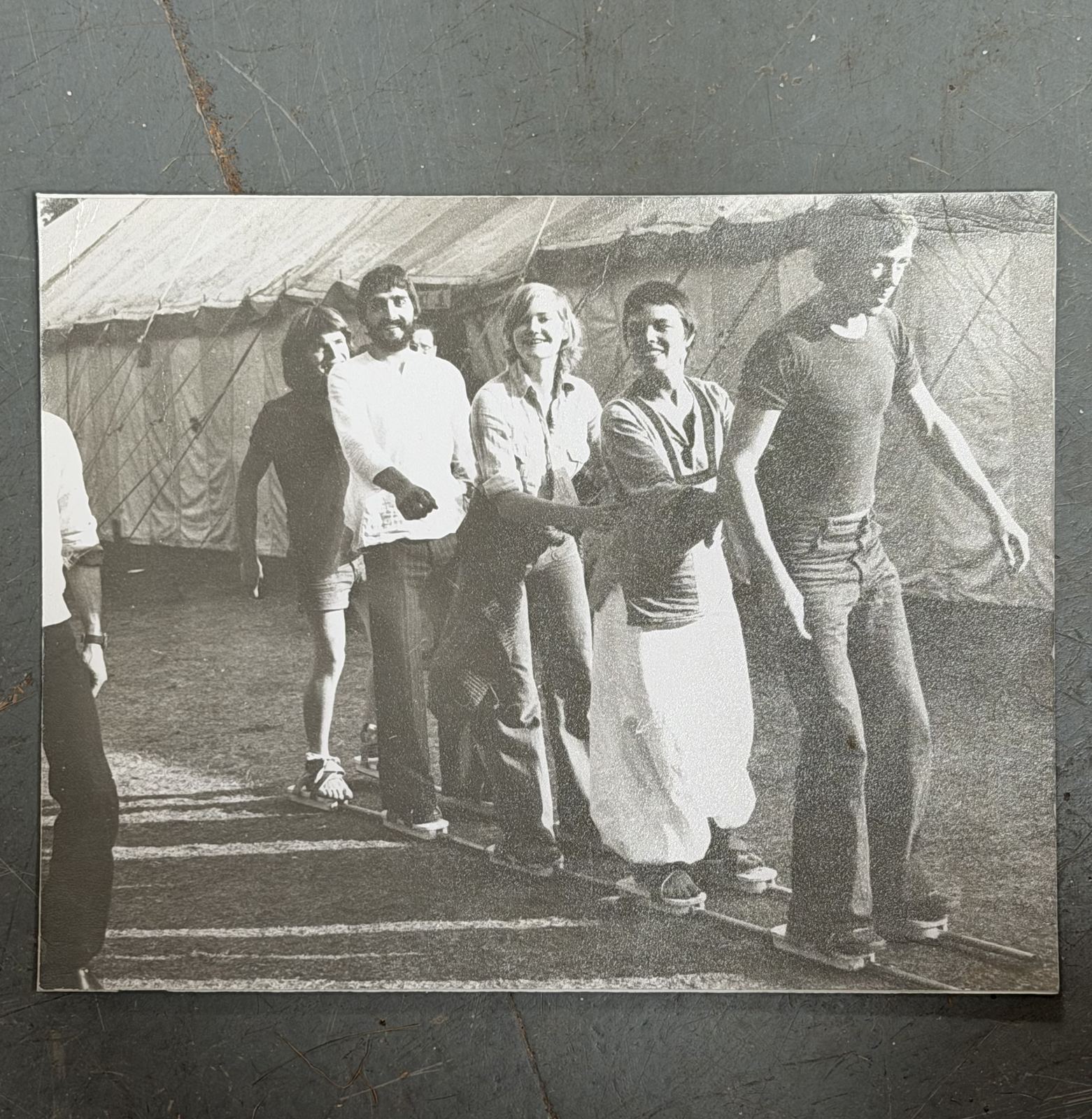
Walkwork — the company in step on the footpieces, beside the marquee, 1970s
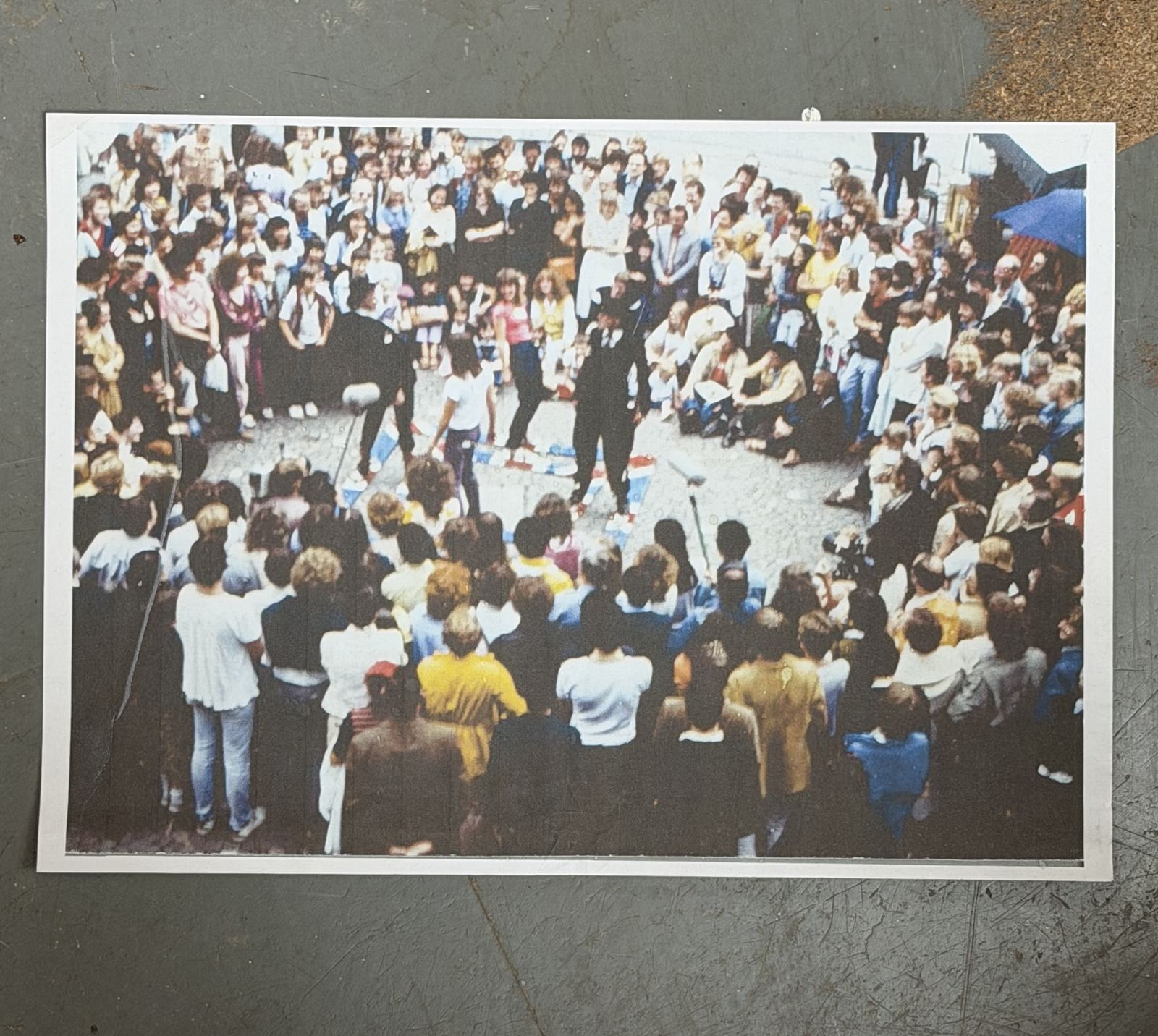
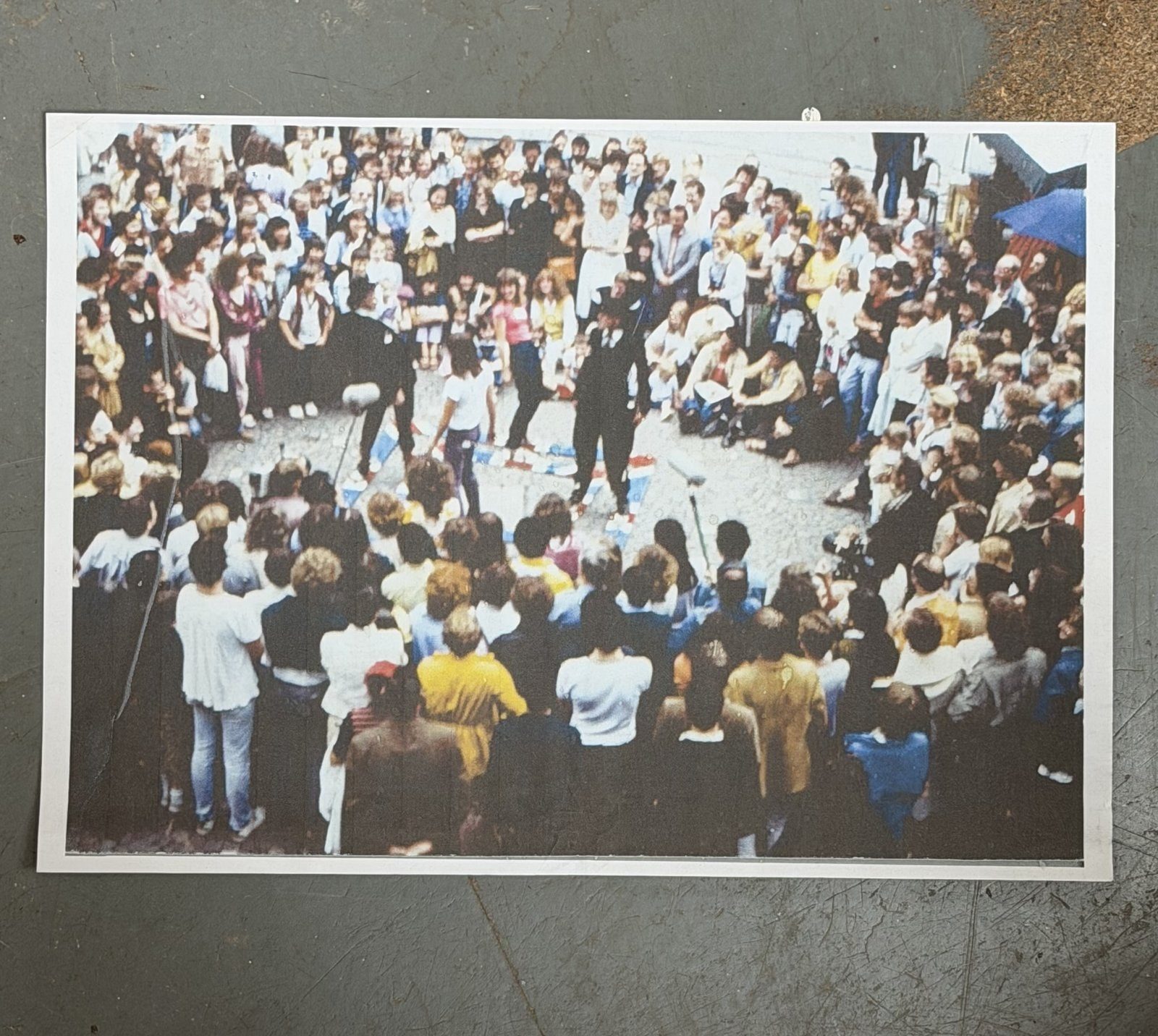
The Great British Square Dance — Brussels; performed in the round, the crowd pressing close
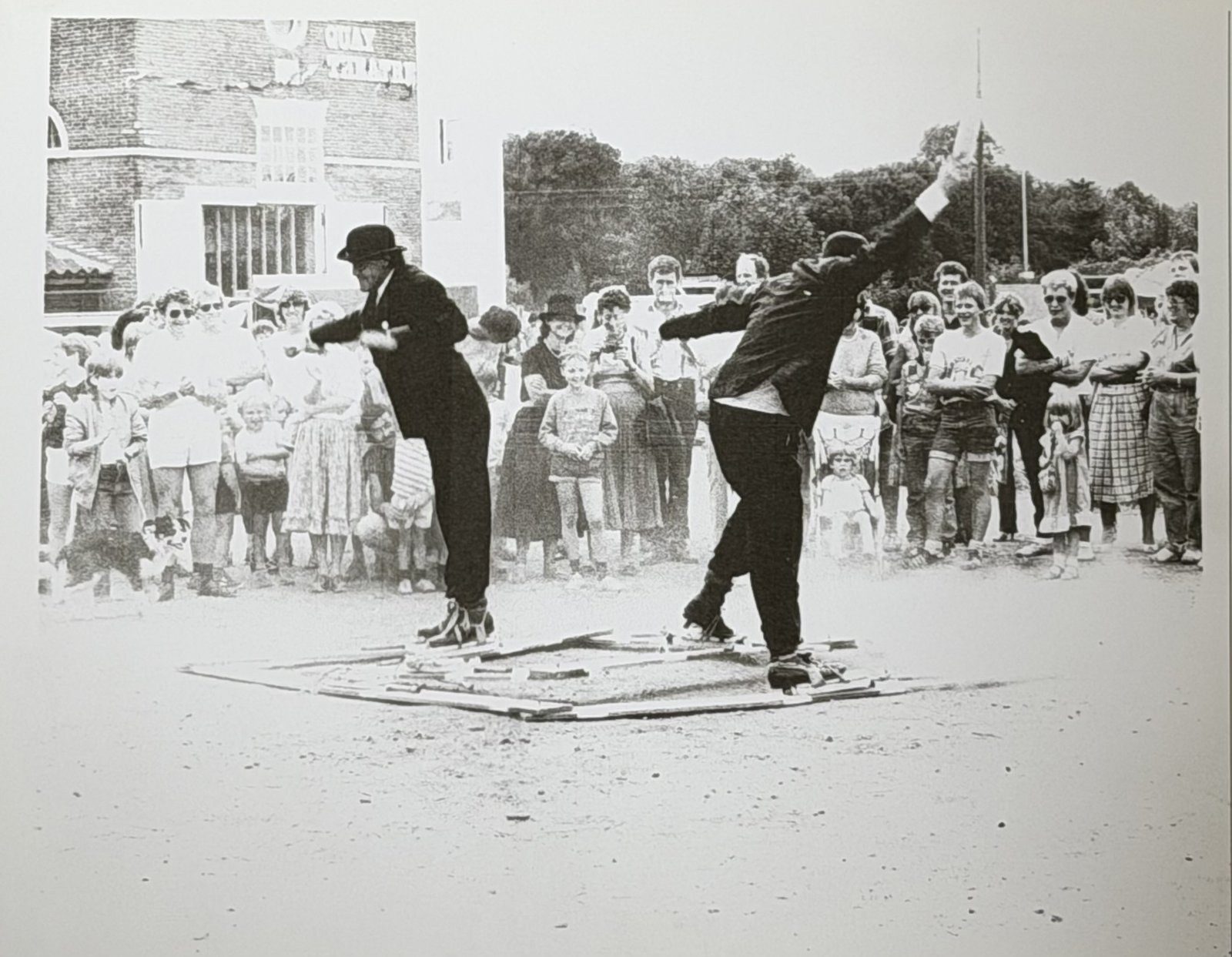
Walkwork in performance — figures bound to shared timber skis, moving together before a crowd
Walkwork in performance — first shown at the Leamington Spa Health Festival, 1976

1975–78

Walkwork

Figures bound to shared timber “skis”, able to move only by moving together — relationship made literal, and balance held between bodies. Built from linkable units, the piece could be re-formed for each performance.

Performed solo and with Forkbeard Fantasy across Britain and Holland — the Edinburgh Festival, the Roundhouse and Oval House in London, and the Shaffy Theatre and Melkweg in Amsterdam.

In Simon’s words — how it was made

“Walkwork consists of a collection of linkable units. Each unit consists of two footpieces; when set up, each footpiece is linked to the units in front and behind, so that the result is two parallel successions of footpieces, equal in length.”

“Each footpiece is a platform with a strapping arrangement for the foot, and a section of mild steel pipe that runs through the centre and projects a foot from the toe end. Alternatively, the supports may be connected by resilient springs, or rope — a succession of equal lengths, or two lengths knotted at either end, along which the units can slide.”

— from Simon’s notes, “Working the Frame” (1998); first performed at the Leamington Spa Health Festival, 1976.

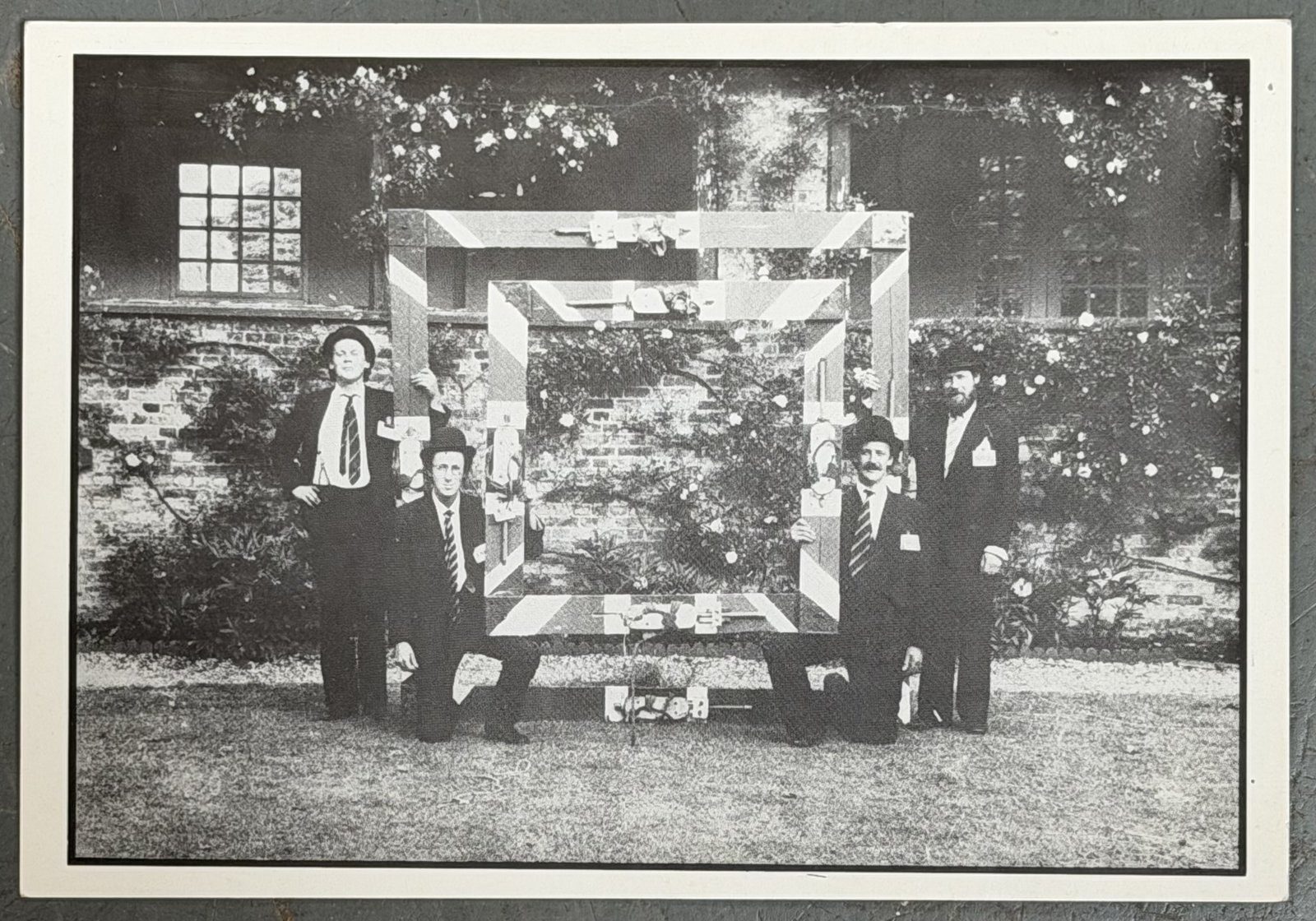
The Great British Square Dancers — bowler-hatted performers around a woven timber frame in a garden
The Great British Square Dancers — Cambridge, 1980

1980

The Great British
Square Dance

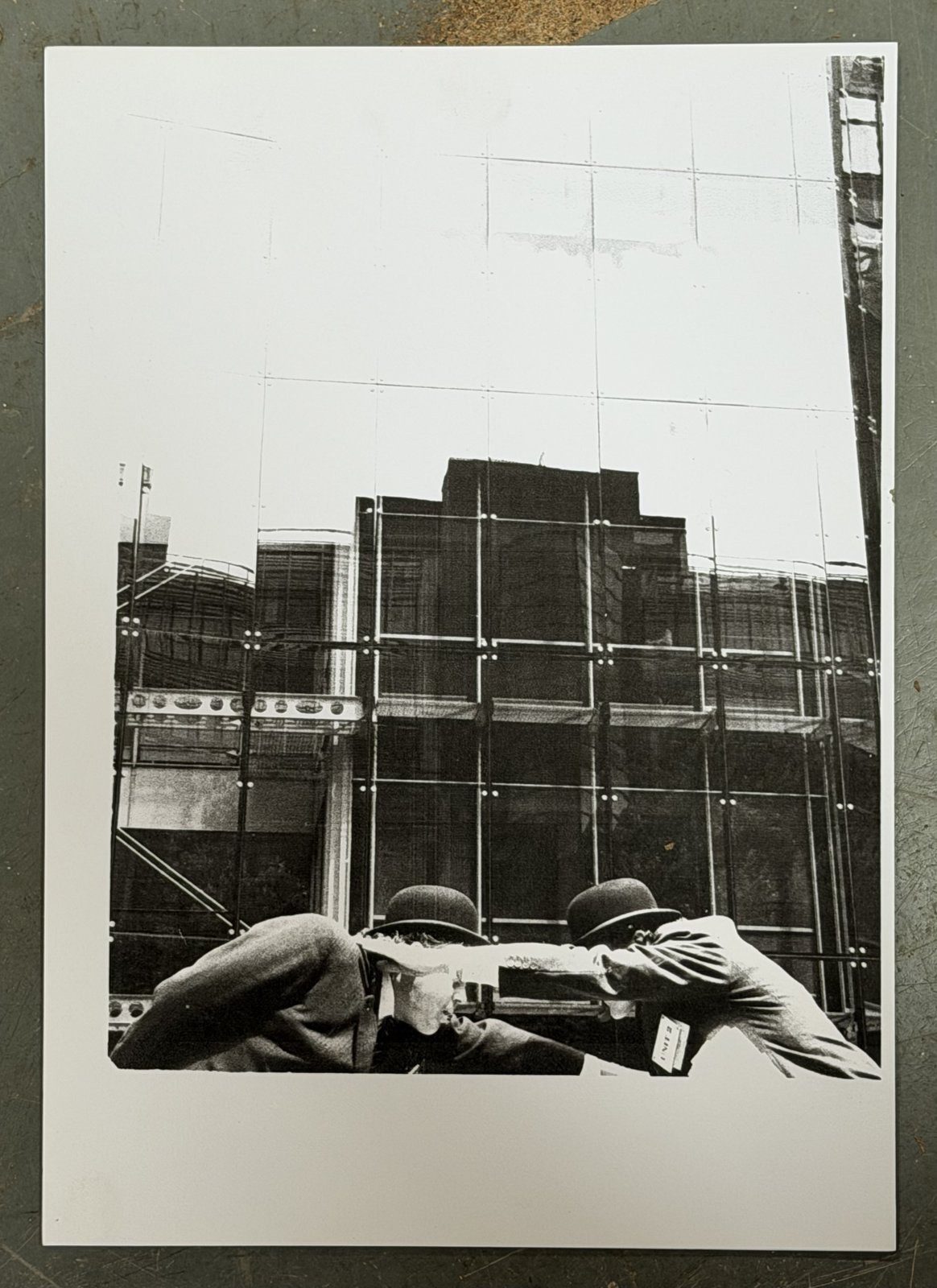
A second Forkbeard Fantasy piece: bowler-hatted figures moving a woven timber frame through the formal patterns of a square dance — structure, space and movement worked out as choreography.

First danced in Jephson Gardens, Leamington Spa — with Lol Coxhill on saxophone — and later performed nationwide and across Europe. Documented here in performance, on the troupe’s own printed postcard, and in Simon’s ink studies for the work.

Built for performance

Frames & constructions

The large timber frames and constructions made for the performances — the same balance of elements that runs through the sculpture, built to a human scale and set in motion.

A tall timber construction built for performance
A cube-frame construction built for performance
A large crowd gathered outdoors around a performance

In the press

Cuttings & programmes

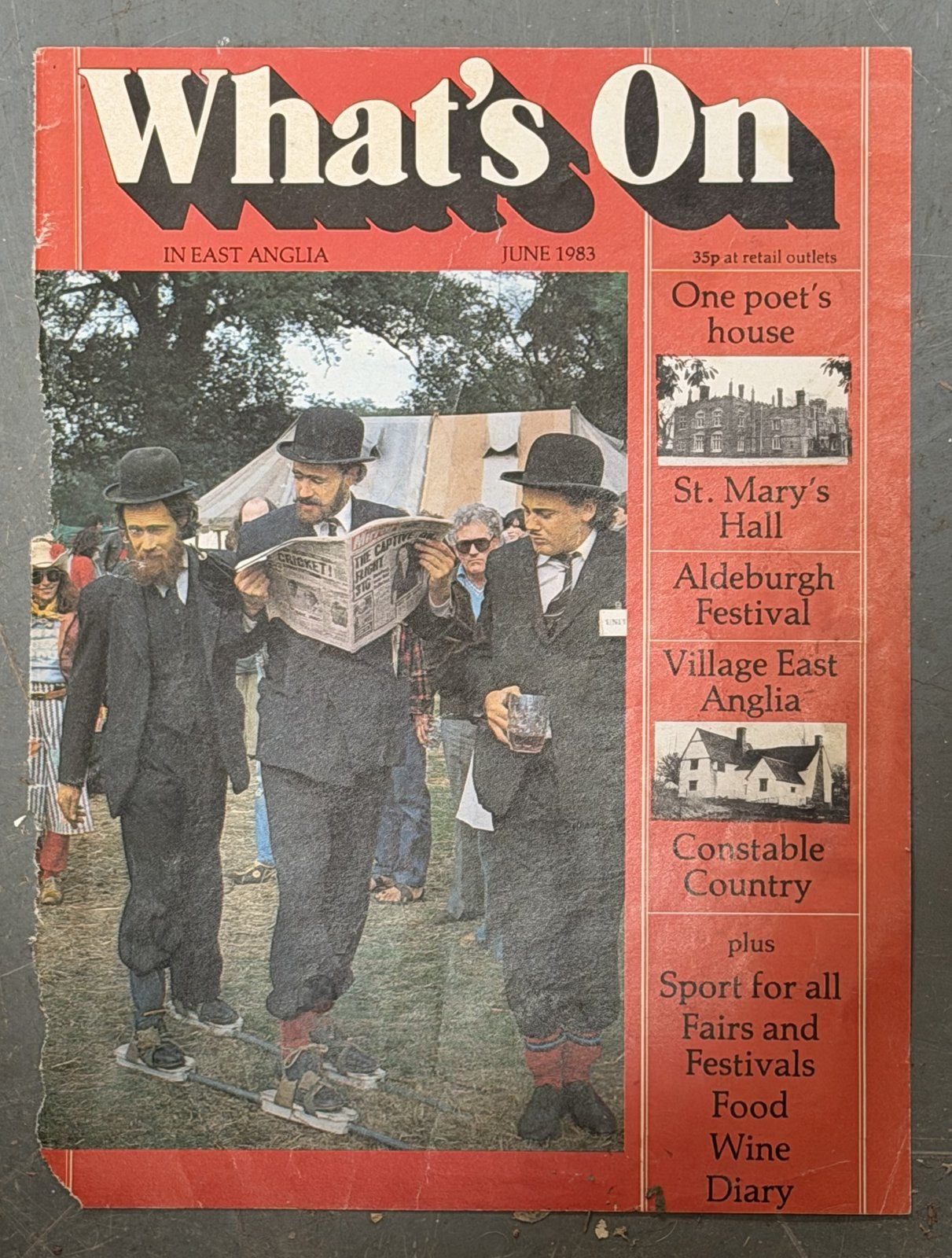
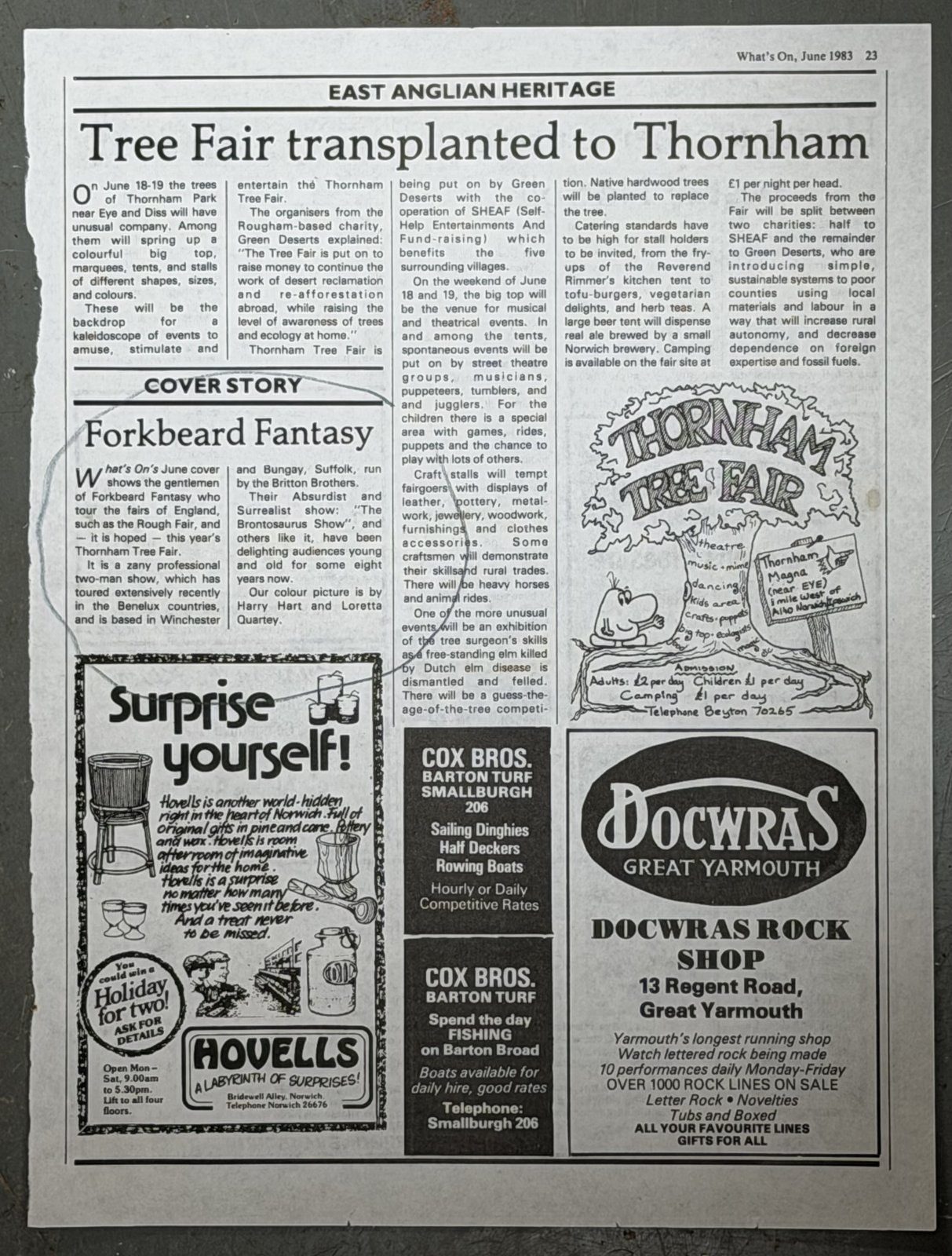
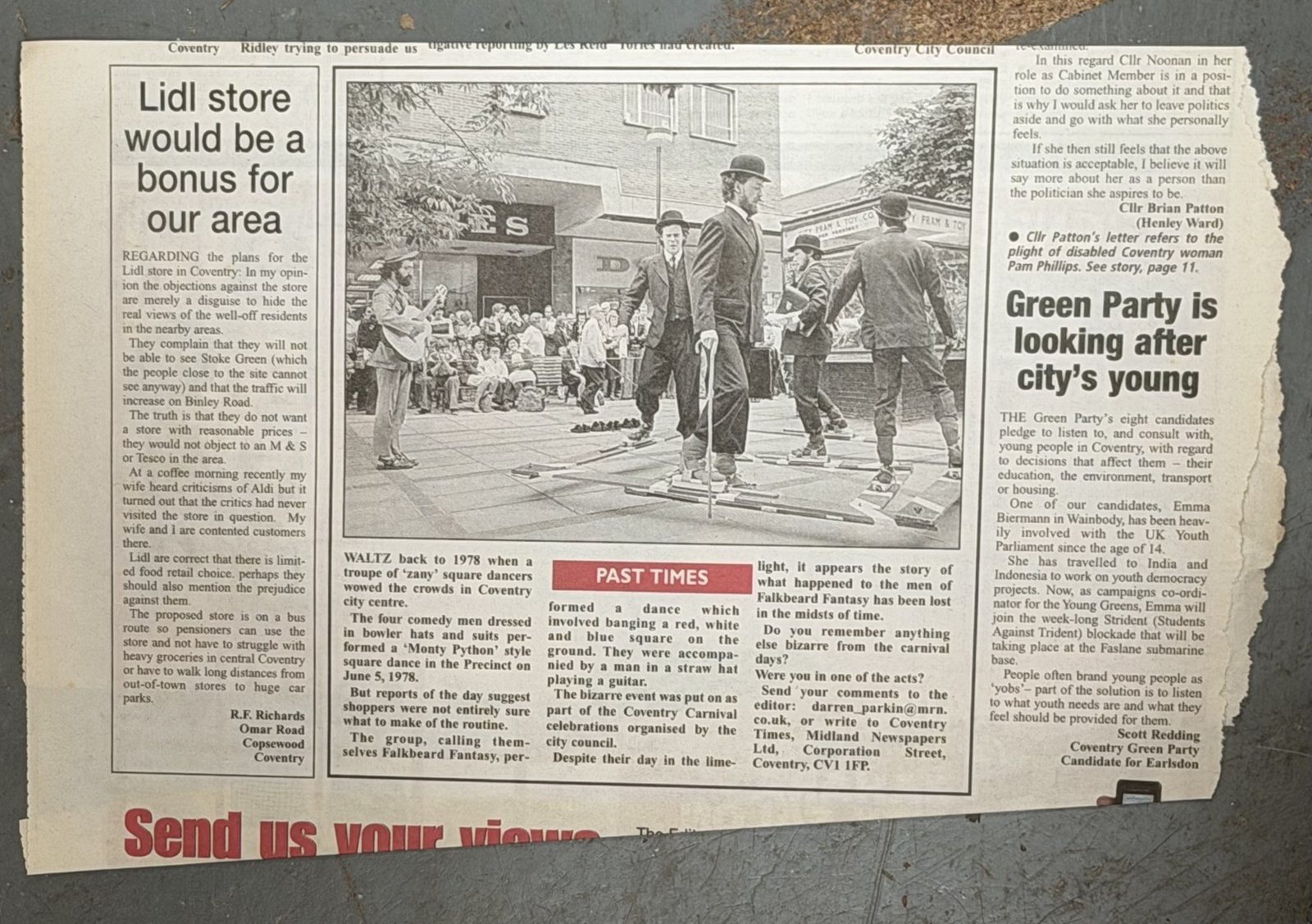
From the Forkbeard Fantasy and performance years — press notices, listings and magazine coverage of Walkwork and The Great British Square Dance, from the studio archive.

What's On magazine cover featuring the performers
What’s On — magazine cover
Newspaper page: Tree Fair transplanted to Thornham, with a Forkbeard Fantasy notice
“Tree Fair transplanted to Thornham” & Forkbeard Fantasy notice
Press clipping covering a performance
Press cutting — performance coverage
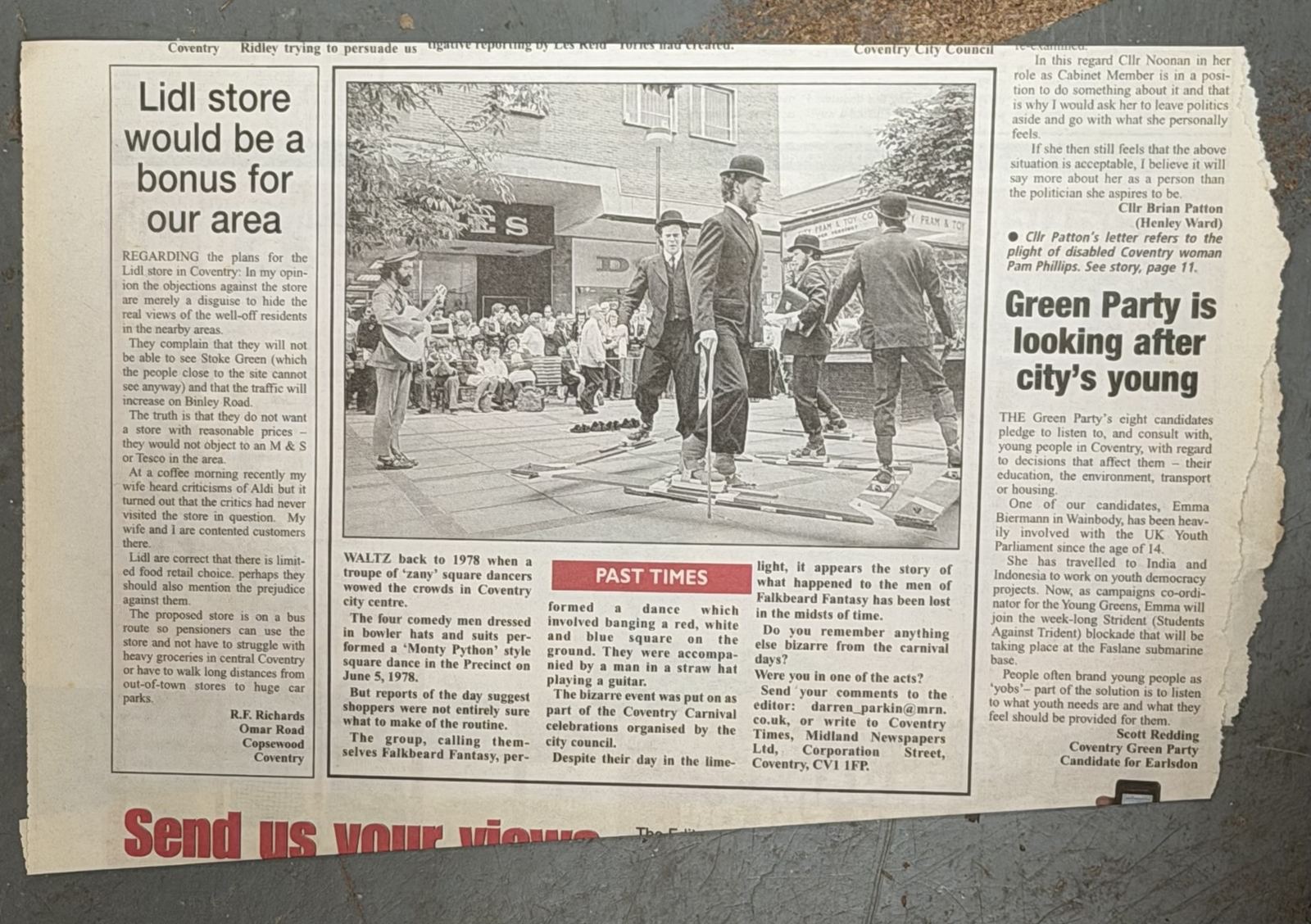
Newspaper 'Past Times' feature showing the square dancers in performance
“Past Times” — newspaper feature on the square dancers
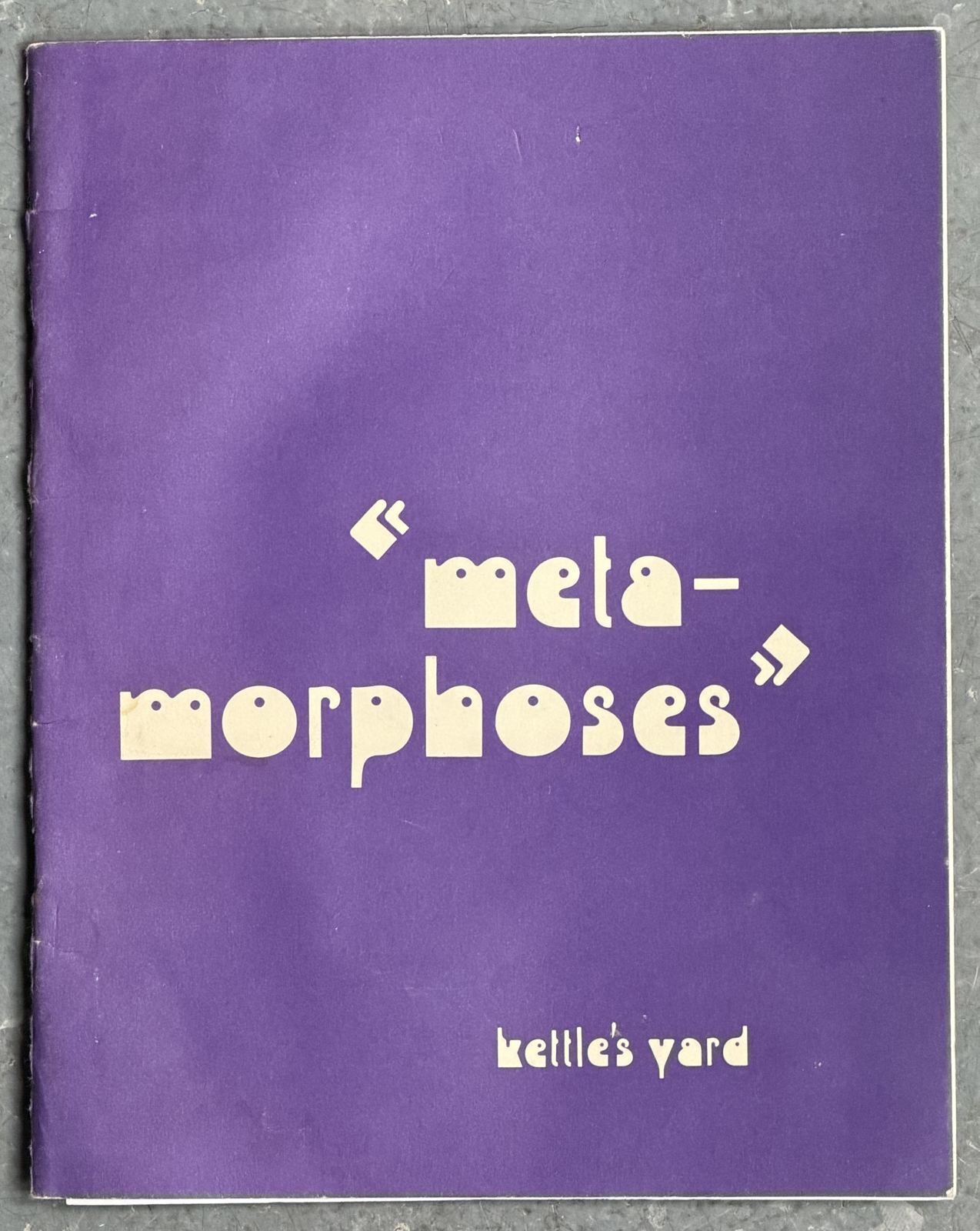
Purple 'meta-morphoses' programme from Kettle's Yard
meta-morphoses programme — Kettle’s Yard, Cambridge

The work · 04

Painting

The TRACKS series, abstracts built from structure and colour, and the monoprint series.

The artist

Simon Britton

Painter, sculptor and performance artist, born 1946 — whose work, in his own words, “arises from studying human form and movement.”

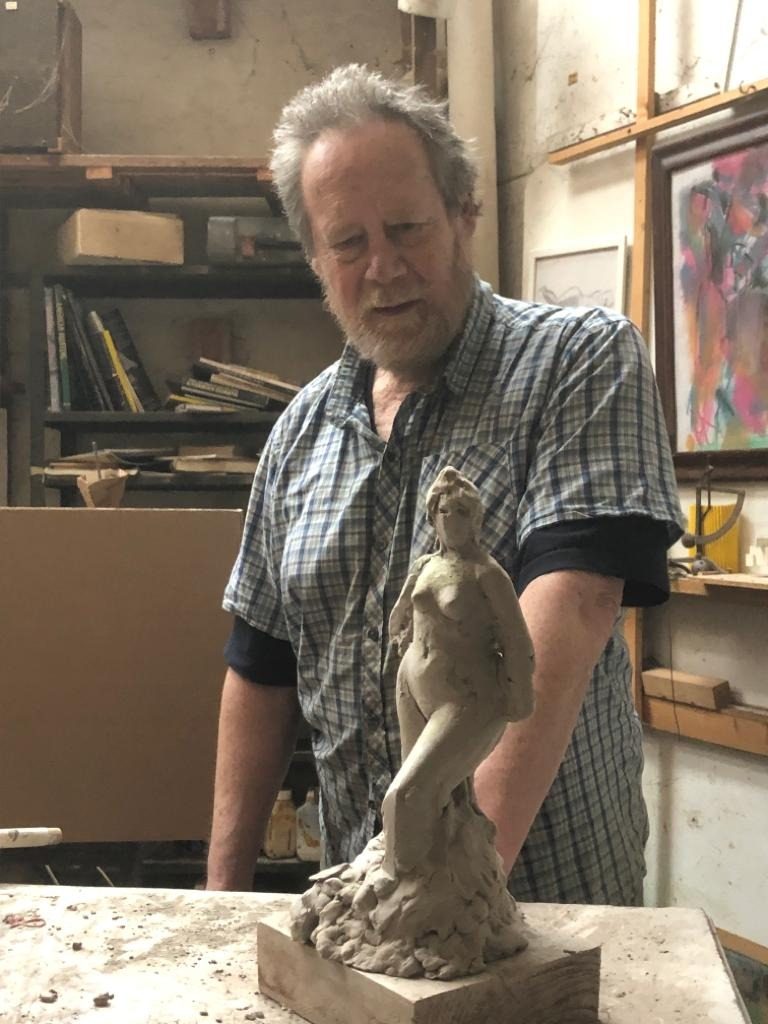
Simon Britton in his studio with a clay figure he is modelling
Simon Britton in his studio.
Born1946, St Andrews, Scotland
TrainedEdinburgh College of Art · Hornsey
BasedCoventry, UK
DisciplinesDrawing · Sculpture · Performance · Painting
SubjectHuman movement & relationships

Across six decades and four disciplines, Simon Britton has pursued a single subject — how the human body moves, and how bodies relate to one another in the space around them.

Born in St Andrews, Fife, in 1946, Simon studied painting at Edinburgh College of Art, where the human-anatomy courses run by Derek Clarke left a lasting mark and the lectures and work of the sculptor Michael Snowden were a particular inspiration. He went on to take his Art Teacher’s Certificate at Hornsey College of Art. The drawing came first and has never stopped: vivid, fast life-studies in coloured pencil, conté and oil pastel that remain the root of everything else he makes.

In the 1970s that interest in movement spilled off the page and into performance. Working with his brothers’ theatre group Forkbeard Fantasy, Britton performed in shows on and off and introduced Walkwork — figures bound to shared timber “skis”, able to move only by moving together — and The Great British Square Dance. The work toured Britain and Holland, from the Edinburgh Festival to the Roundhouse and Oval House in London and the Melkweg in Amsterdam.

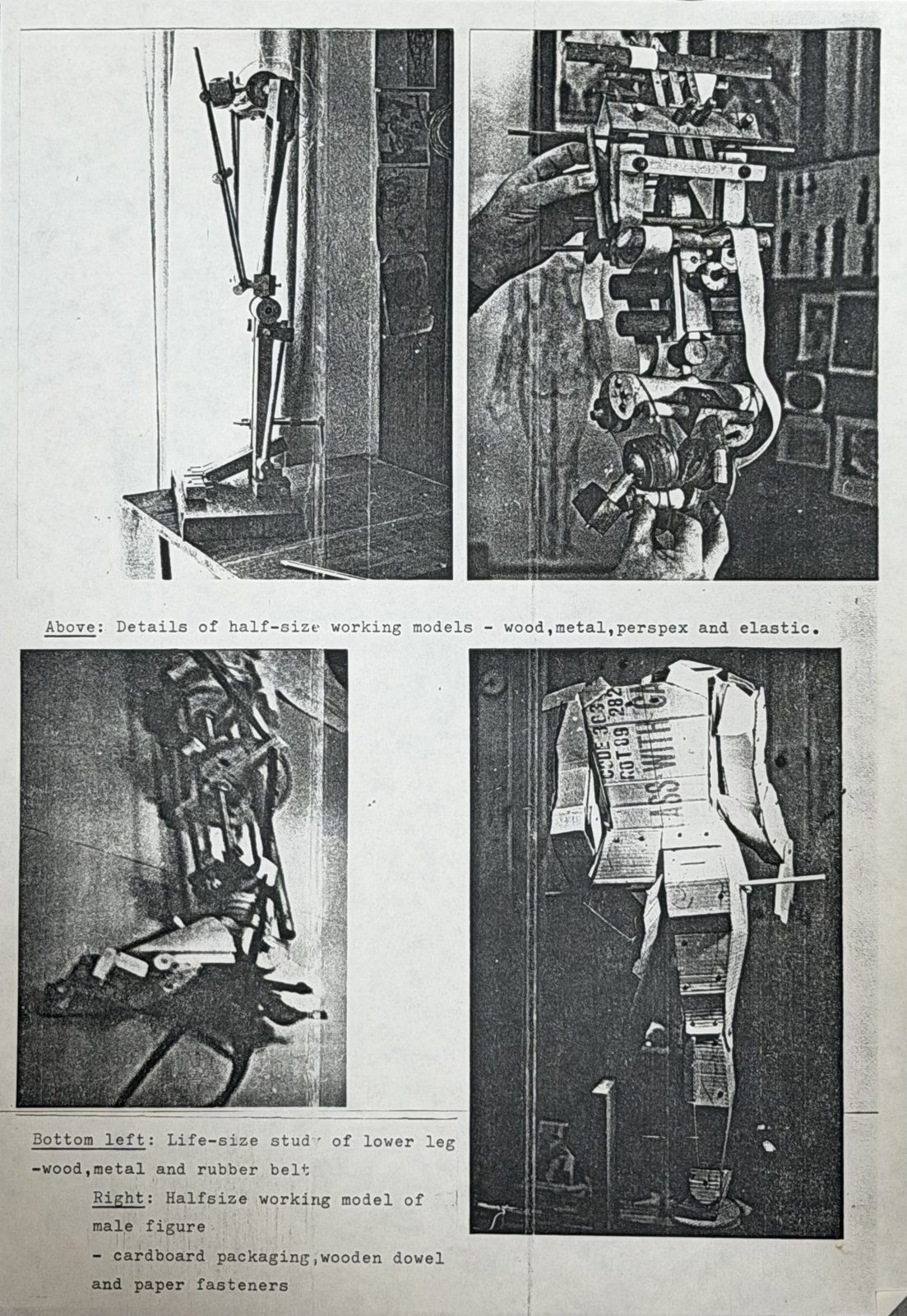
Alongside the performances came constructions and sculpture — jointed wooden figures assembled from dowel, block and turned offcuts, each caught at the height of a movement — and the TRACKS paintings.

Teaching & the studio

Education and his own work have always run in parallel, nourishing one another. After a Craft, Design & Technology teaching certificate at Dudley College of Education, Britton taught art at Warwick School and art and CDT across Coventry’s secondary schools. He supervised a craft project for a NACRO scheme in Warwick for young offenders, and taught in community education — art for blind people and for people with learning difficulties — at venues across the city.

At home he set up The Yellow Press, a silkscreen printing venture, and later a studio with the painter Marta Firkowska. He has taught a life-drawing evening class at Coventry University and ran art courses for the University’s “New Learning in Later Life” scheme in the studio. He still runs a course there today with people who have stayed with him since those Later Life days — now lifelong friends. He continues to model portrait heads in clay directly from the sitter — the studio is next on this journey.

In his own words

“All my work arises from studying human form and movement — this is true even of what are apparently the most abstract of my works, which are symbolic reductions. For example, the triangle may be taken as a basic form within the human figure.”

“The drawings and paintings feature the human figure stationary and in movement, where the attitudes symbolise and embody the relationships. The dynamic constructions, which involve varying degrees of participation by people, show human beings constrained by social and technological frameworks. To free ourselves we must know our chains.

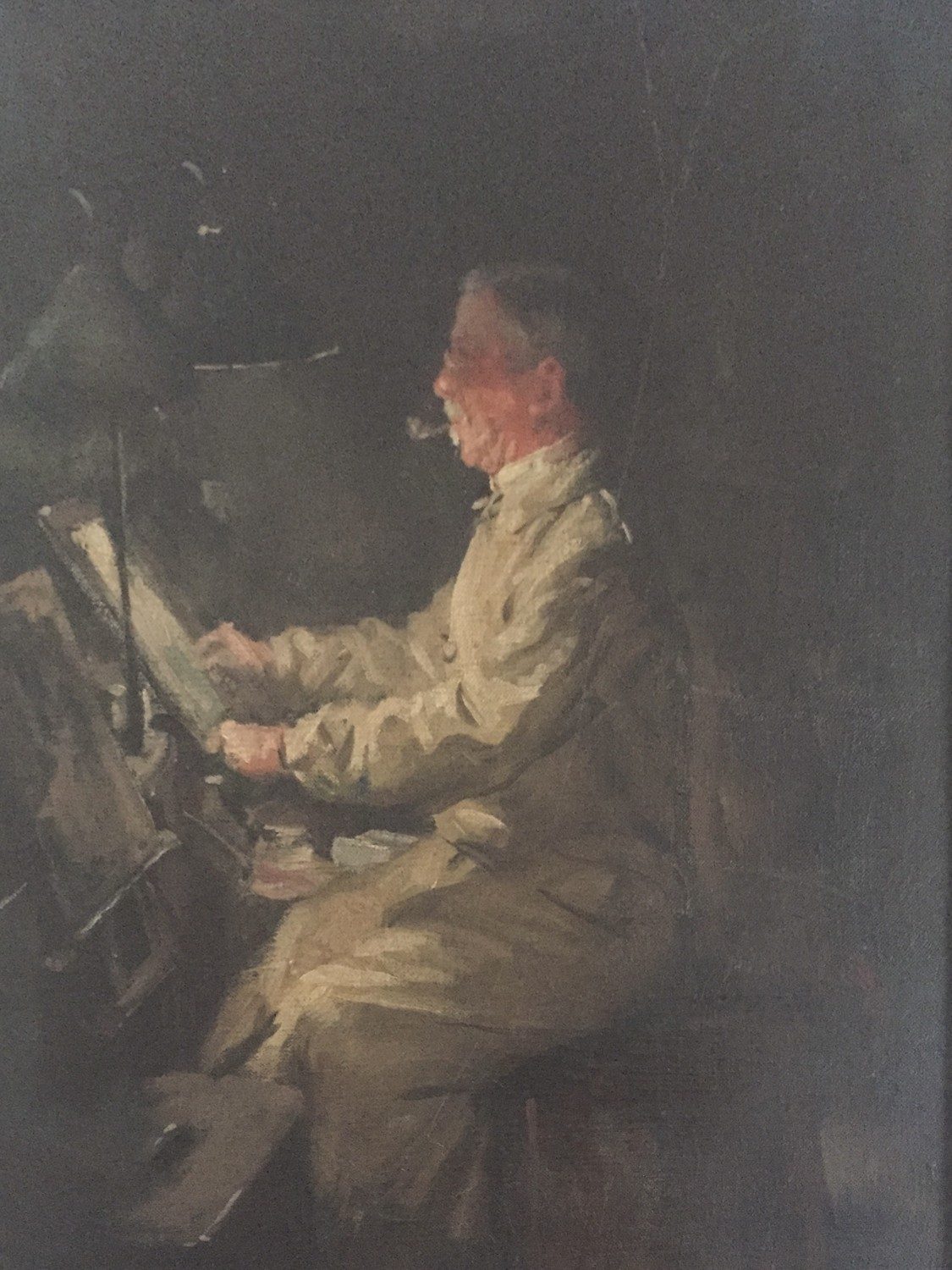
A lamplit oil portrait of William Flockhart, architect, painted by an unknown artist and kept in Simon Britton's family
Portrait of William Flockhart, architect — by unknown artist, friend of William. Kept in the family.

Lineage

An architect in
the family

Art runs back through Simon’s family. This lamplit oil is a portrait of William Flockhart, architect — a forebear of Simon’s — painted by an unknown artist, a friend of William.

A quiet inheritance of the same preoccupation that runs through all of Simon’s work: a person absorbed at work beneath the lamp. (Provenance and dates to be confirmed.)

The practice

Four ways into one idea

Simon’s work falls into four sections, held together by a single concern — structure, space, movement, light and colour. All of it, in his words, “arises from studying human form and movement.”

01

Drawing

Fast, full-colour life studies — the figure built, dissolved and re-stated until it begins to move on the page. “The figure stationary and in movement, where the attitudes symbolise and embody the relationships.”

02

Sculpture

Jointed wooden figures and dynamic constructions — the body imagined as a mechanism, caught at the top of a movement. The constructions “show human beings constrained by social and technological frameworks.”

03

Performance

Walkwork and the Forkbeard Fantasy years — movement and relationship not depicted but lived out in front of an audience. “To free ourselves we must know our chains.”
04

Painting

Abstracts built from structure, rhythm and colour — the same concern by other means. “Even what seems most abstract is a symbolic reduction of the figure — the triangle taken as a basic form.”

In brief

A working life

The path Simon’s art and teaching have taken — in his own order, from his notes.

In the studio

Modelling from life

Simon at work on Alfreda — a portrait head modelled in clay from a live sitting in his studio, circa 2015. The same lifelong subject, worked now directly in clay: a face, an hour, the marks of the hand left visible.

Simon Britton standing in his studio and looking to the camera, a portrait painting and the tools of the studio around him
Simon in his studio — an invitation in, to the work and the sitter.

The sitting

A session, start to finish

25 photographs

Father & son

Documenting the journey

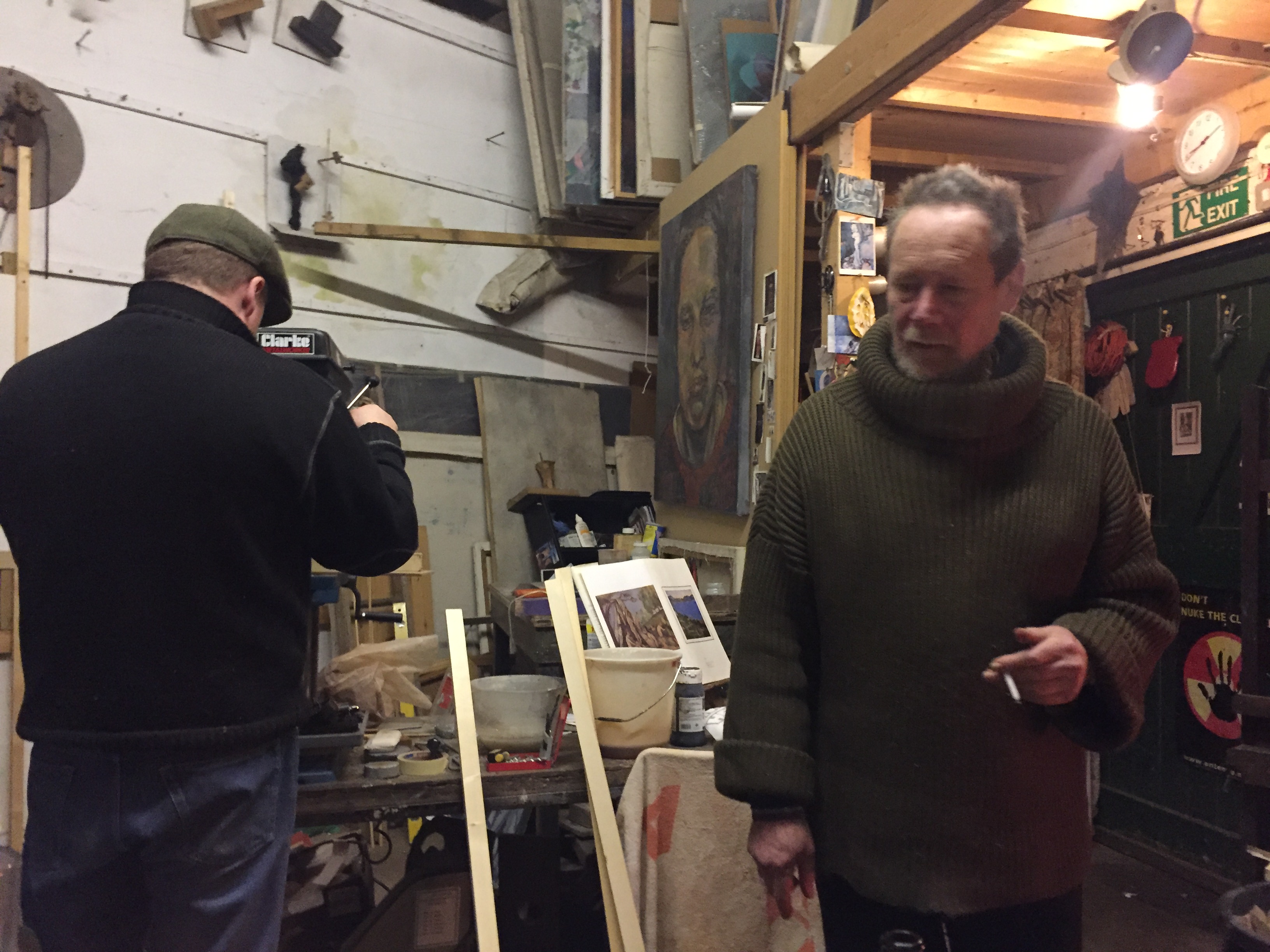
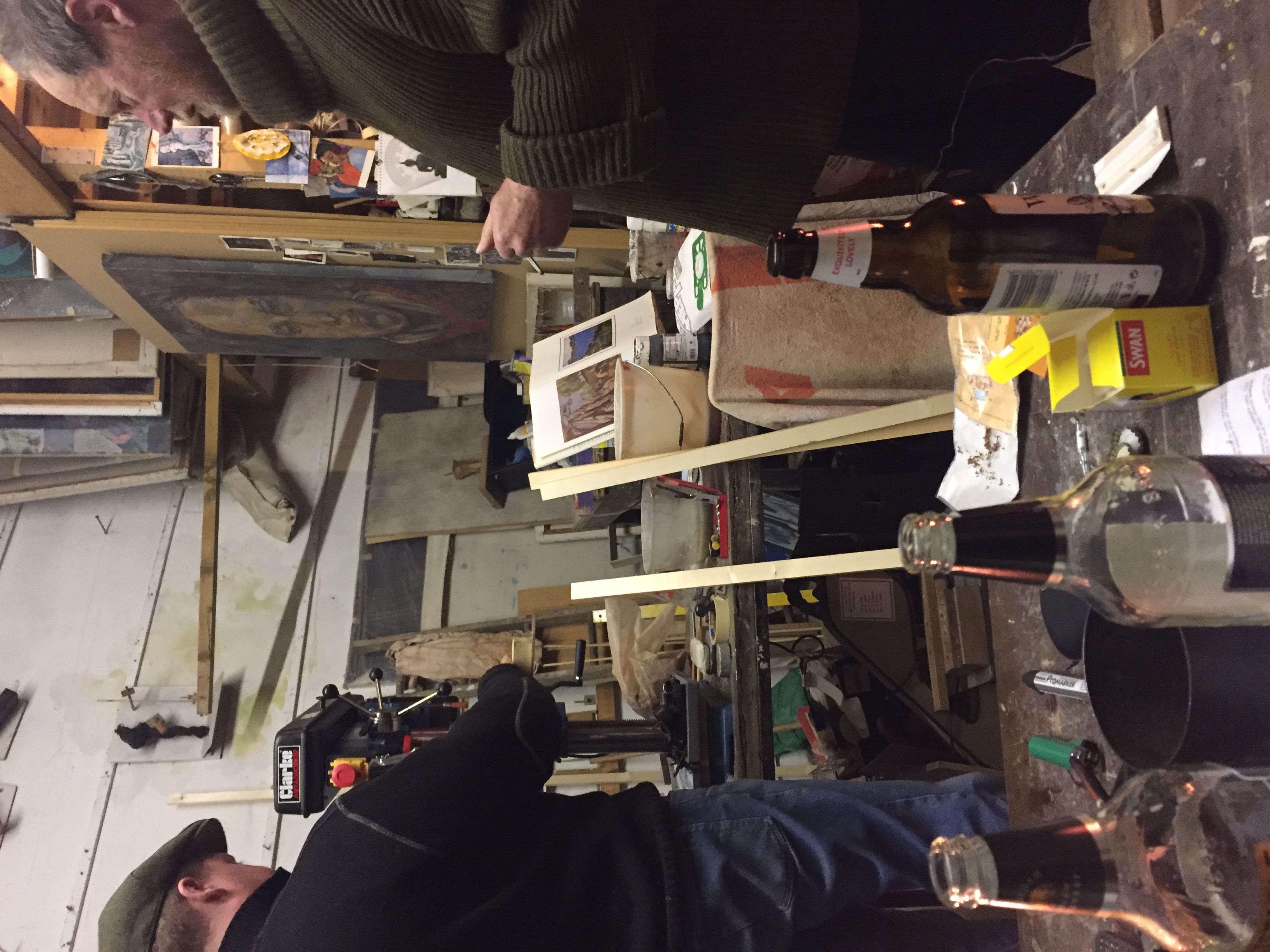
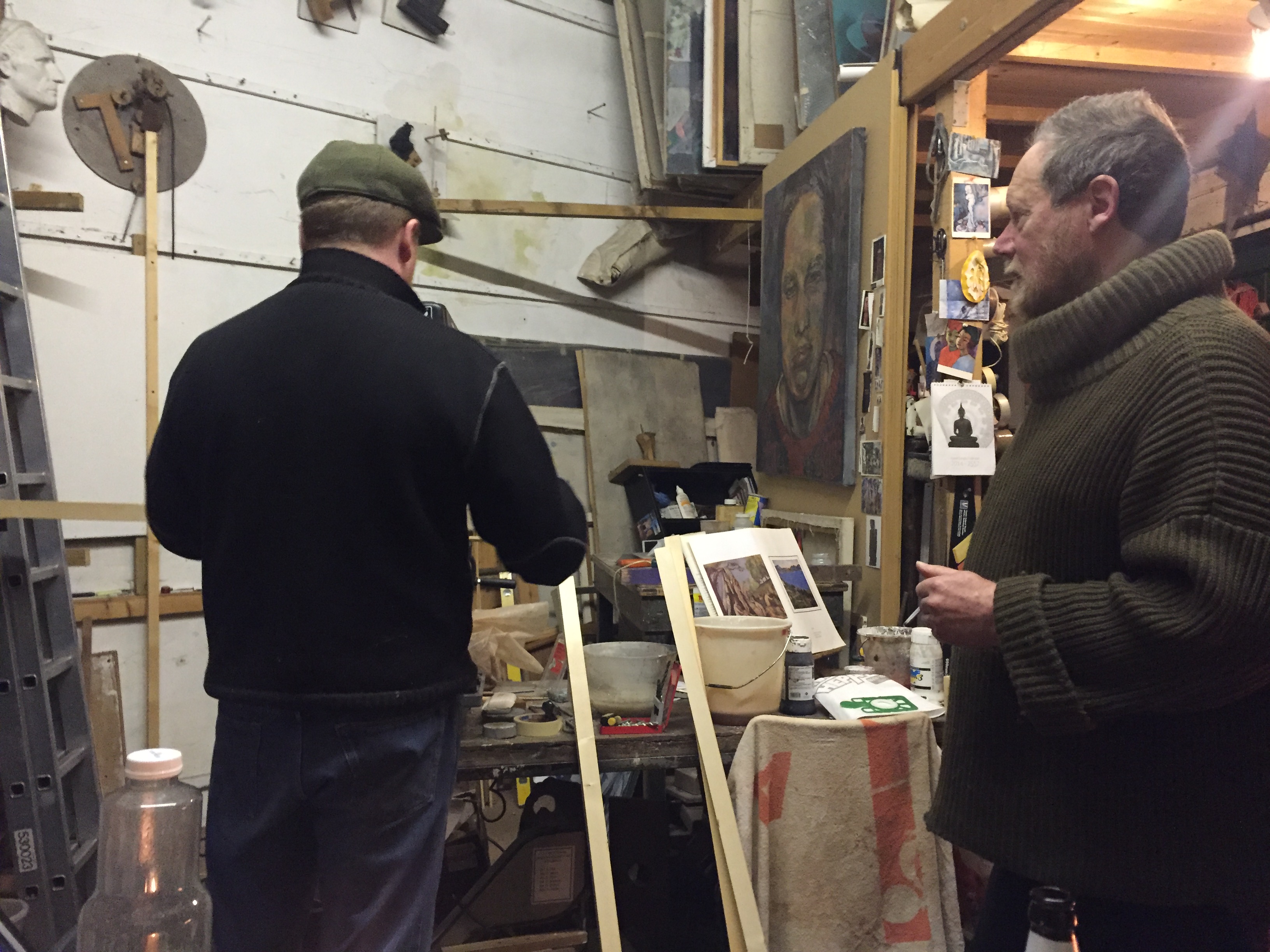
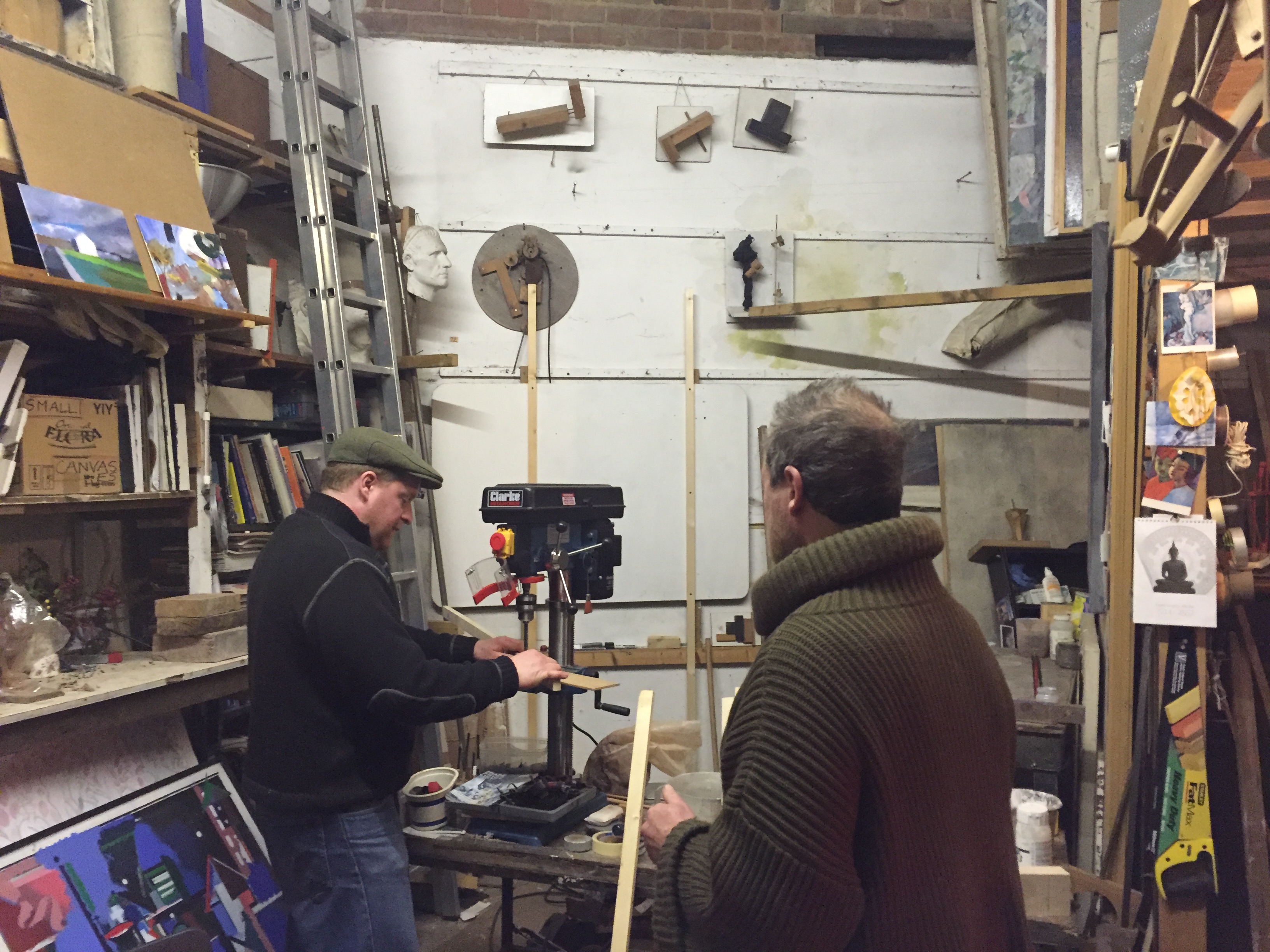
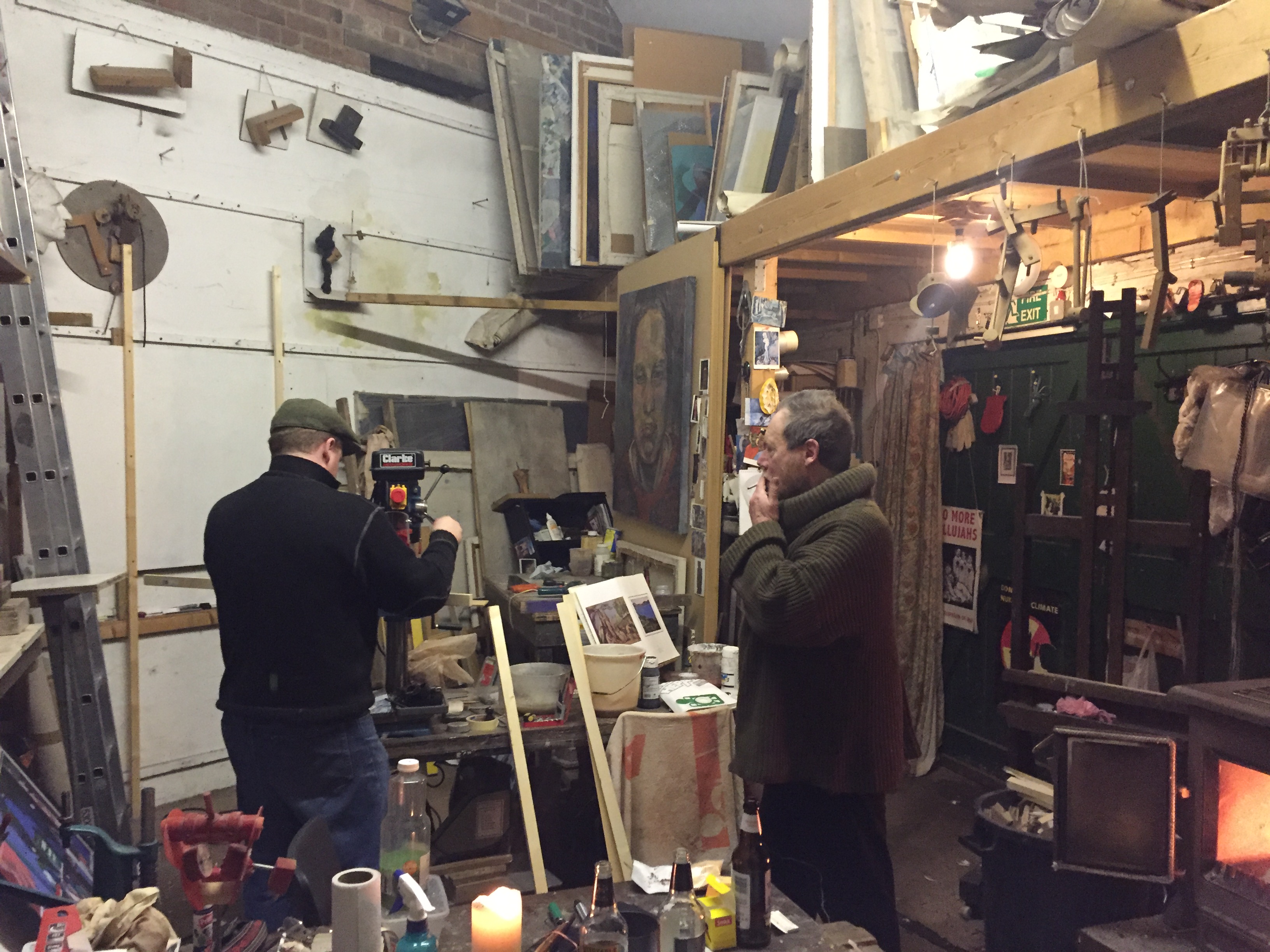
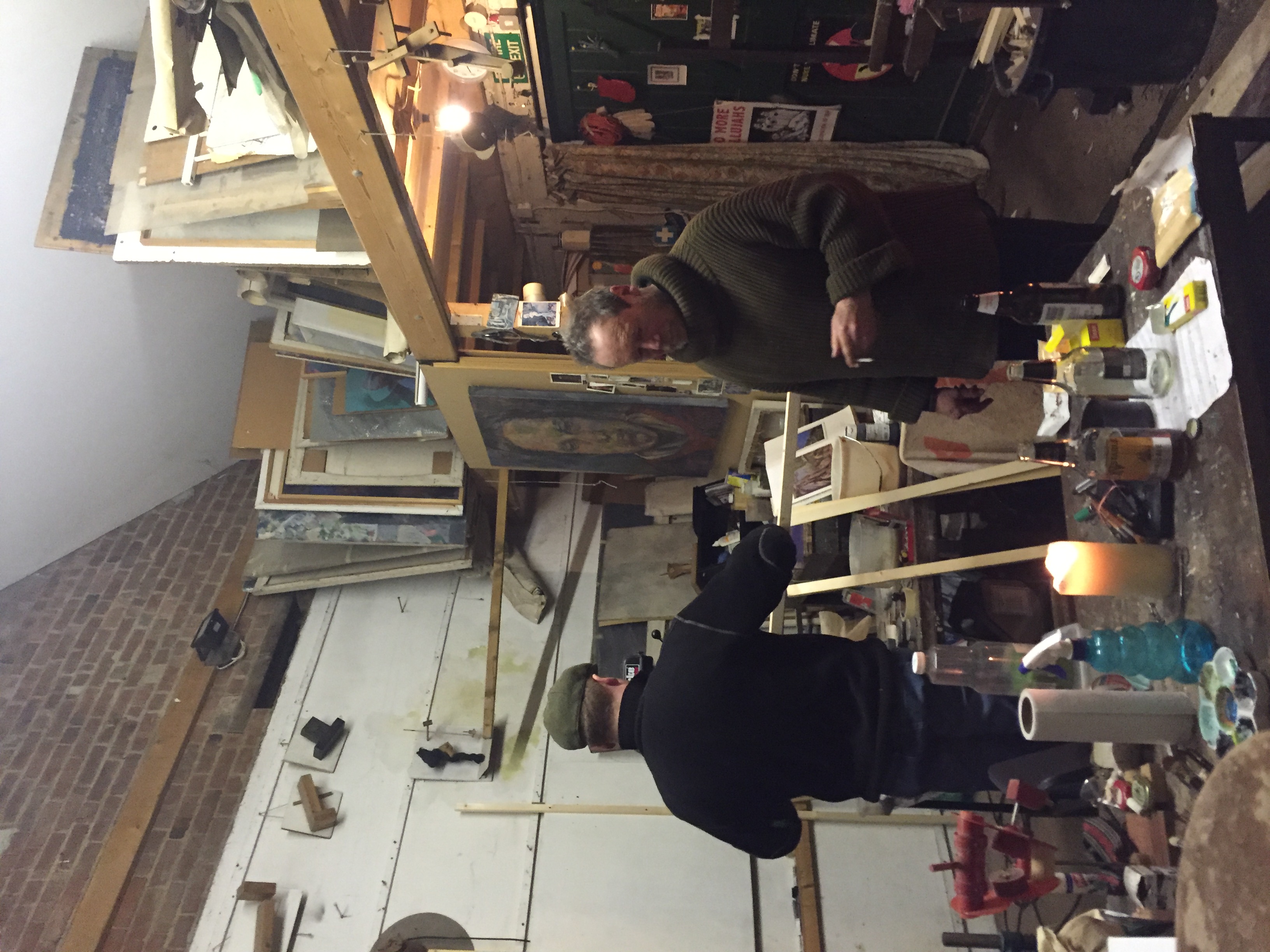
Simon’s son Henry has taken on the task of documenting his father’s artistic life — the studio, the work and the conversations behind it. These photographs, and this website, are part of that record.

Simon Britton and his son Henry in the studio
Simon Britton and Henry working in the studio
Simon Britton and Henry at the bench
Simon Britton in conversation in the studio
Simon Britton and Henry in the studio
Simon Britton by the stove in the studio

Curriculum vitae

CV

Training, exhibitions, performances and a long career teaching art and life drawing. Transcribed from Simon’s records — a downloadable PDF can be added on request.

Education & training

1965–69Edinburgh College of Art — Diploma in Drawing & Painting
1970–71Hornsey College of Art — Art Teacher’s Certificate (ATC)
1979–80Wolverhampton Polytechnic — Teaching Certificate in Craft, Design & Technology
1998–99Coventry University — Postgraduate Diploma, Fine Art

Selected exhibitions

1985–With BAG — Bilston, Stafford, Hereford, Botanical Gardens (group & workshops)
1984Mercia Arts Open Show — Hereford Art Gallery
1983“An Assistance from…” — Ikon Gallery, Birmingham
1979–83With the 79 Group — Ibis, Dudley, Tibners, Stafford, Hereford, Stoke-on-Trent
1978Van Lierop & Britton — Wolverhampton Art Gallery (two-person) · Midland Arts Centre
1977Ibis Gallery, Leamington Spa
1975Bath Place, Leamington Spa · Mountbatten Art Gallery, Southampton
1973Warwick Gallery, Warwick

Performance

1971–80Performance art with Forkbeard Fantasy (his brothers’ troupe) and solo — Walkwork and The Great British Square Dance
Edinburgh Festival · Roundhouse & Oval House, London · Action Space · Birmingham Arts Lab · Bracknell · Brighton Festival · Kettle’s Yard, Cambridge
1974Holland Festival
1978Shaffy Theatre & Melkweg, Amsterdam
1980The Great British Square Dancers — Cambridge

Teaching

1991–Coventry University — Short Courses, Life Drawing (incl. LILLI “Approaches to Drawing” & Fired Clay Sculpture)
1986–97Part-time & supply teaching, Coventry secondary schools (Art, CDT)
1982–87Mid-Warwickshire College of FE & Trinity RC School — Painting & Life Drawing
1980–82Lyng Hall, Coventry — full-time Art/CDT
1971–78Warwick School — full-time art teacher
Project Supervisor of Craft & Design, NACRO scheme for young offenders, Warwick
Community education — art for blind people and people with learning difficulties

Simon Britton

“Education and my own work have always run parallel, nourishing one another.”

Get in touch

Contact
the studio

Enquiries about available work and commissions are always welcome. Simon replies to messages personally.